By KeyXplore · February 11, 2026 · 6 min read
With more than 4.6 lakh road accidents reported every year in India, a dash camera has gone from a luxury gadget to a real necessity. Whether you’re in chaotic city traffic or on a highway trip, a good dash cam is a reliable witness for insurance claims, accident evidence and protection against fraud.
This guide covers the features that matter and the models leading the Indian market in 2026.
The 2026 pricing landscape
Dash cameras in India fall into four price brackets, each with a different level of protection and performance:
- Entry level (₹3,000 – ₹5,000): basic 1080p recording with essentials such as loop recording and a G-sensor.
- Value for money (₹5,000 – ₹7,000): typically 2K recording, built-in Wi-Fi and better low-light performance.
- Affordable premium (₹8,000 – ₹12,000): the sweet spot, with dual-channel (front and rear) cameras, GPS tracking and AI-driven safety alerts.
- Flagship premium (₹12,000 – ₹20,000+): native 4K UHD systems with top-tier Sony Starvis 2 sensors.
The “4K trap” vs. balanced reliability
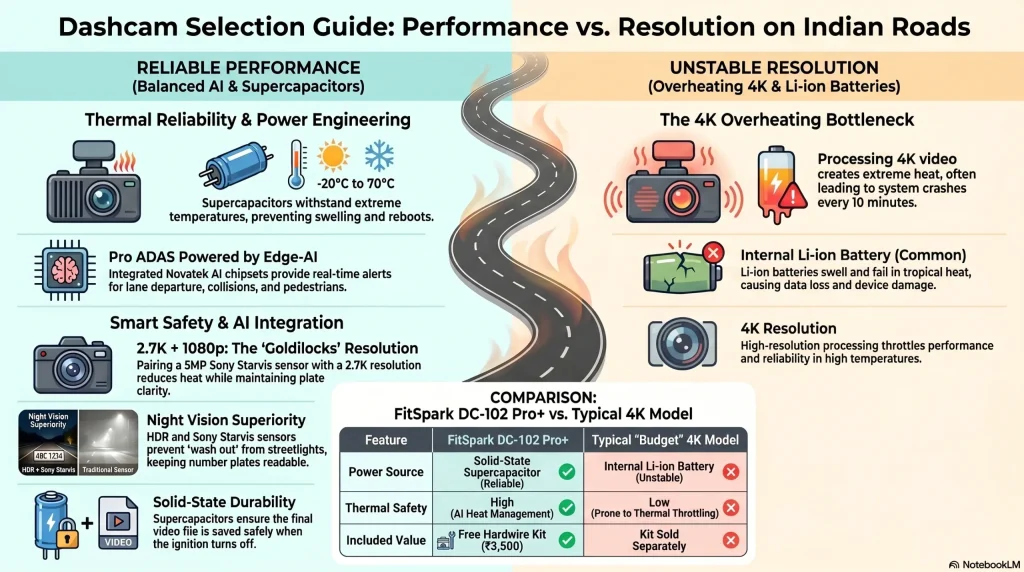
Native 4K resolution (as in the Qubo Dashcam Pro 4K or 70mai A810) offers stunning clarity, but it brings serious heat problems in tropical climates. Encoding 4K video generates a lot of heat, and combined with Indian cabin temperatures above 40°C, that can lead to restarts, factory resets and corrupted footage.
A more balanced approach is the FitSpark DC-102 Pro+, which pairs a 5MP Sony Starvis IMX335 sensor with a Novatek NT96565 AI chipset. By capping front resolution at a real 2.7K (30 FPS), it runs cooler while still capturing enough detail to read number plates and road signs.
Supercapacitors vs. lithium batteries
In India’s extreme heat, build quality matters. Standard lithium-ion batteries can swell or overheat above 45°C. Supercapacitors (used in the FitSpark DC-102 Pro+ and Qubo Pro X) are far more durable, working reliably from -20°C to 70°C. They let the camera safely save the last video file when the engine is switched off, without the risk of fire or battery damage.
AI-driven ADAS (advanced driver assistance)
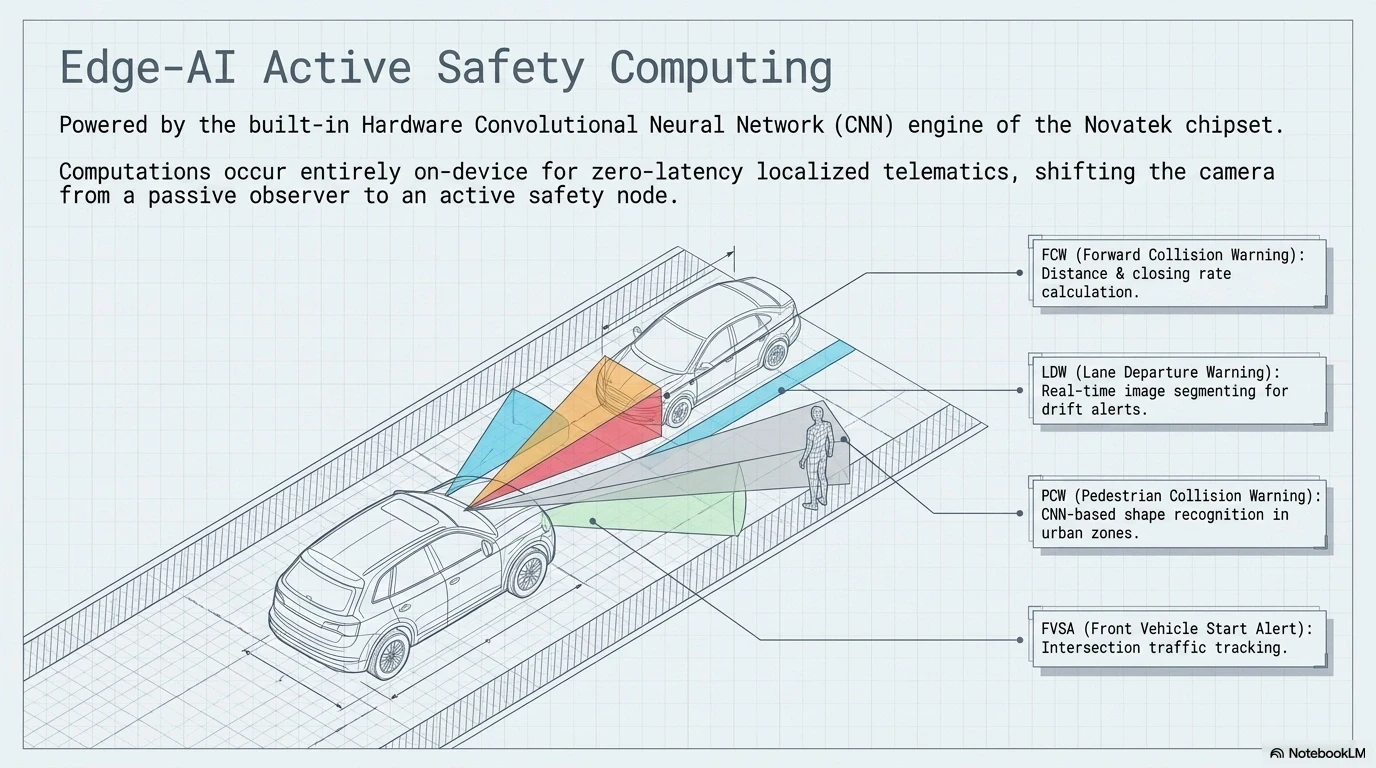
Modern dash cams use on-device AI to give real-time safety alerts. The FitSpark DC-102 Pro+ has a “Pro ADAS” suite with four of them:
- Forward Collision Warning (FCW): watches the distance to the vehicle ahead to help prevent front-end impacts.
- Lane Departure Warning (LDW): alerts you if you drift out of your lane.
- Pedestrian Collision Warning (PCW): detects people on the road in urban areas.
- Front Vehicle Start Alert (FVSA): tells you when traffic ahead starts moving.
Night vision and HDR
Night-time footage matters on poorly lit roads. Look for sensors like the Sony Starvis IMX335, which performs well in low light. High Dynamic Range (HDR) also makes a big difference by balancing bright streetlights against a dark sky, so colours look natural and number plates stay readable at night.
Top dash cam picks for 2026
The links below are Amazon affiliate links. If you buy through them, we may earn a small commission at no extra cost to you.
MyFitSpark DC-102 Real 2.7K

Dual-channel 2.7K HDR dash cam with a Novatek AI chipset, 5MP Sony Starvis IMX335 sensor, Pro ADAS, 3.16″ IPS display, night vision, GPS and Wi-Fi.
70mai A810

True 4K HDR dual dash cam with a built-in GPS logger, ADAS, Sony Starvis 2 IMX678 sensor, 150° wide view, optional parking mode with motion detection and time-lapse, and up to 256GB storage.
CP PLUS Dash Cam CP-F28B

Dual dash cam with rear camera, Full HD 2MP front and rear, GPS, G-sensor, 24/7 parking monitoring, Wi-Fi and support for SD cards up to 1TB.
Qubo Dashcam Pro 4K (2026 Edition)

True 4K with a Sony Starvis IMX415 sensor, dual channel, ADAS, NightPulse vision, 8MP UHD+ front and 2MP FHD rear cameras, 2.8″ LCD, built-in GPS and Wi-Fi, and up to 1TB storage.
Hidden costs: hardwiring and storage
When budgeting for a dash cam, remember these extras:
- Hardwire kit (₹3,000 – ₹4,000): needed for 24/7 parking surveillance. FitSpark currently includes a free hardwire kit worth ₹3,500 with its models, which noticeably lowers the total cost.
- High-endurance microSD card: dash cams constantly rewrite data, so standard cards can fail. Use U3-rated cards such as Lexar Silver Plus or SanDisk Extreme (128GB to 256GB). Avoid Samsung cards with Novatek chipsets, as they can cause lag.
Final verdict
For the everyday Indian driver, the ₹8,000 – ₹10,000 range offers the best balance of heat tolerance and smart features. 4K looks impressive on paper, but a reliable 2.7K supercapacitor-based camera with a dedicated AI chipset for safety alerts gives the most peace of mind for long-term use in India’s harsh climate.